
How to use FM27 opposition instructions: find the panel, pick the right two or three players, avoid over-complicating the plan and adjust during the match.
FM27 Opposition Instructions (2026): How to Set Them
Quick answer: FM27 keeps the opposition instructions panel inside the Tactics screen. You use it to give your team specific instructions about one or two opposing players, usually their main creator and their most dangerous scorer. The panel is not a second tactic: two or three well-chosen instructions help, ten instructions turn your shape into a mess.
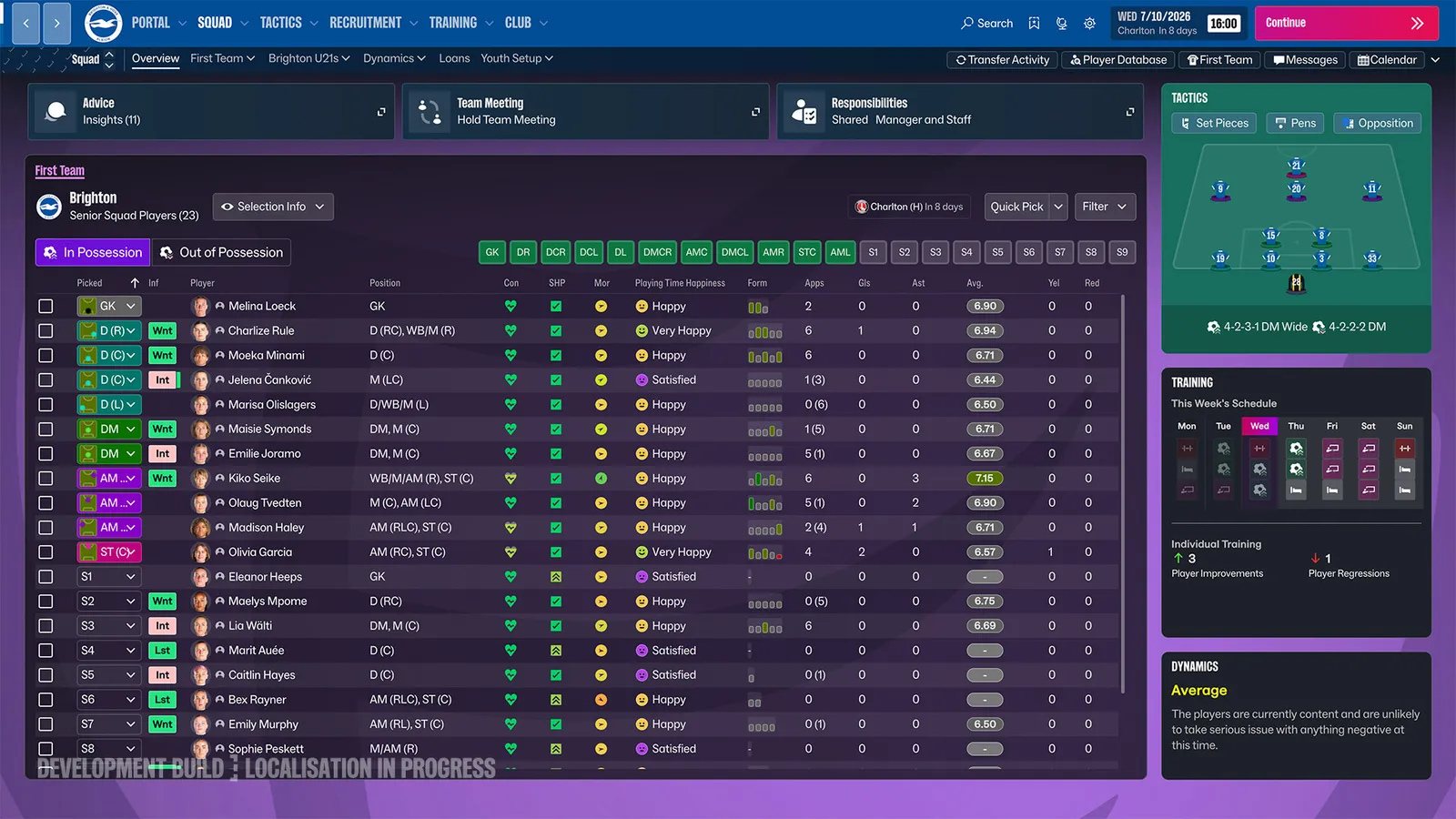
Where the panel lives
Open Tactics, then look for the Opposition button in the tactical panel on the right-hand side of the squad screen. The official FM27 screenshots show it next to Set Pieces and Pens.
The panel lets you pick an opposing player and apply instructions that change how your team defends him. The exact option set is visible in-game; Sports Interactive has not published a separate manual for it. In recent FM versions the choices cover closing down, tackling intensity, tight marking and which foot to show the player onto. Treat the in-game labels as the authority, because they can change between patches.
[!guide] fm27-tactics The tactics guide covers the team instructions these individual orders sit on top of.
Why opposition instructions matter in FM27
FM27's Tactical Effectiveness system has four pillars, and one of them is Next Match Information. The official deep dive says this covers what you know about the opponent and whether your plan accounts for it.
Opposition instructions are the most direct way to show the game that you have accounted for the opponent. They do not replace the scout report or the training plan, but they are the part of the plan that says "we know their left winger cuts inside, so we are not going to let him".
The tactical effectiveness guide explains how the four pillars combine. The short version: a good opponent plan raises the ceiling, but it cannot rescue a squad that cannot execute the shape.
Start with the scout report
Do not set opposition instructions from the team name alone. Open the opposition report and look for:
- Their most influential creator. The player with the most key passes or assists, not necessarily the highest rating.
- Their main scorer. The player who takes the most shots, especially from central positions.
- Their weak link. A full-back who cannot defend, a centre-back who is slow on the turn, a midfielder who panics under pressure.
- Their set-piece threat. The target man or the near-post runner.
The scouting guide covers how to read the report and what the data actually means. If you skip this step, you are guessing.
Pick the one player you must stop and the one player you want to force into a mistake. Everything else should be handled by the team shape.
The three-plan framework
Most matches need one of three opponent plans.
Plan A: stop the creator
Use this against a team that builds everything through a single playmaker or inverted winger. Close him down, show him onto his weaker foot and make someone else beat you.
The risk is that closing down one player pulls your midfield out of shape. Only do it if your midfield has the legs to cover the gap, and do not combine it with a high press that already asks them to cover ground.
Plan B: starve the striker
Use this against a direct team with one dominant centre-forward. Tight-mark him, deny the easy ball into feet and let your centre-backs compete for the aerial ball on their terms.
The risk is that tight marking opens space behind your defence. If your line is high, a striker who rolls the marker has a clear run. Drop the line or keep a covering midfielder.
Plan C: attack the weak link
Use this against a back four with one poor full-back. Show the ball to that side, press the full-back and force him to play with his weaker foot.
The risk is that the rest of the team shifts across to cover, which opens the far side. This plan works best with a winger who can switch play quickly.
What not to do
Do not press everyone. Opposition instructions are individual exceptions. If every player is closed down, you have not set a plan; you have set a chaotic press that drains stamina and breaks the shape.
Do not show a left-footed winger onto his left. The instruction is "show onto foot", so pick the foot that makes him go where you want. A left-footed player cut inside is the most common example of getting this backwards.
Do not ignore the referee. A hard-tackling instruction on a player who is already on a yellow card is a red card waiting to happen. Check the match events before you keep it.
Do not over-complicate a lower-league squad. Tactical Complexity is a real budget in FM27. A simple plan that the players understand beats a detailed plan they cannot execute.
Adjusting during the match
Opposition instructions are not a fire-and-forget setting. Watch the first fifteen minutes and ask three questions:
- Is their creator getting the ball in dangerous areas?
- Is the striker winning his duels?
- Is the weak link actually being tested?
If the answer changes, change the instruction. Tactical Tweaks are useful here because they apply a bundle of team instructions at once, while a single opposition instruction can be removed without touching the rest of the plan.
At half time, check the player ratings and the body language. A player who is being doubled up may be tired but still dangerous; a player who has stopped demanding the ball may not need the attention anymore.
Training the plan
FM27's training overhaul puts more emphasis on preparing for the next match and the opposition. Sessions can focus on pressing high or sitting in a low block, and those sessions feed the tactical understanding that the effectiveness gauge measures.
That does not mean you must train the exact opposition instruction. It means the team's general preparation should match the plan. If you are going to press the weak full-back, train pressing; if you are going to sit deep and deny the striker, train the low block.
The training guide covers schedules, and the set-piece guide covers the dead-ball side of the opponent plan.
About FM27 (2026)
Football Manager 27 is developed by Sports Interactive and published by SEGA. It releases on Windows and Mac on 10 November 2026 at $59.99 / £49.99 / €59.99, with a 10% pre-purchase discount until launch.
The Steam store page lists the official features. The Steam news hub carries the Tactical Effectiveness and match engine deep dives, and the Football Manager site has the studio's feature pages.
Official source: FM27 on Steam
FAQ
Are opposition instructions in FM27? Yes. The panel is reached from the Tactics screen.
How many opposition instructions should I set? Two or three. One to stop their best player, one to target their weak link, and nothing else unless the match demands it.
Do opposition instructions affect Tactical Effectiveness? They contribute to the Next Match Information pillar, which is one of the four inputs. They also add tactical complexity.
Should I close down the goalkeeper? Only if you are chasing a goal late and accept the shape risk. It is not a default instruction.
Can I change opposition instructions during a match? Yes. Remove or change them as the game state changes, especially after a red card or a substitution.
Do opposition instructions work in lower leagues? They can, but keep them simple. A low-ability squad struggles with a detailed individual plan.
[!next] Match Preparation
- Tactics: The team plan underneath.
- Tactical Effectiveness: The four pillars.
- Scouting: Finding the player to target.
More Football Manager 27 Guides
The best FM27 wonderkids outside the big-five leagues, sorted by wage tier, with the clubs that sell and the ones that do not.
FM27 Console is out on PS5 and Xbox Series X|S. Here is how it differs from the PC version, what Game Pass Ultimate includes, and what is still unconfirmed.
FM27 contracts still revolve around wages, clauses and agent fees. Here is how to read the deal sheet, time a renewal and avoid a wage-bill disaster.
The FM27 Demo is free on Steam and gives you six in-game months. Here is how it works, what carries into the full game and what it does not include.
FM27 editor guide: pre-game editor vs in-game editor, how to install real name and logo fixes, and what custom databases change in a save.
Five FM27 formations compared by pressing lanes, role demands and tactical complexity, from 4-2-3-1 to a back three.
The FM27 free agent list worth signing: 34 players without a club, their ages, positions and what each one still does well.
The FM27 Steam free weekend ran from 29 October to 3 November 2026. Here is what it included, what replaced it, and how to play now.